
Office Desk Accessories: Seasonal Workspace Bundles That Fit
By Aisha Karim • 1st Jan
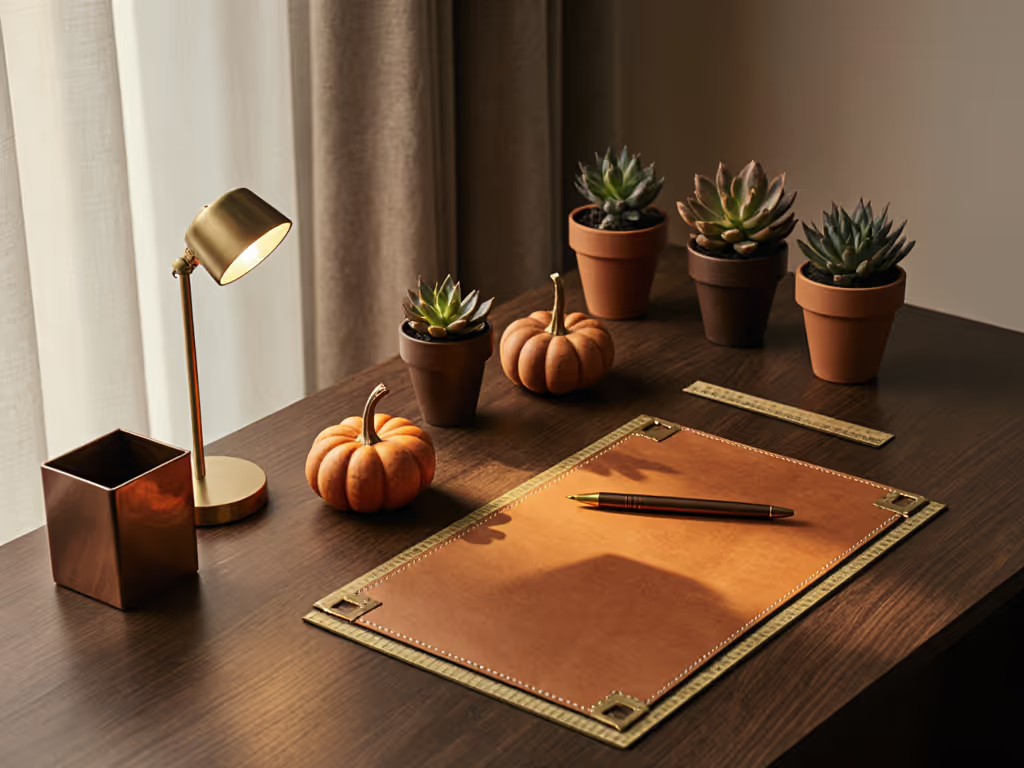
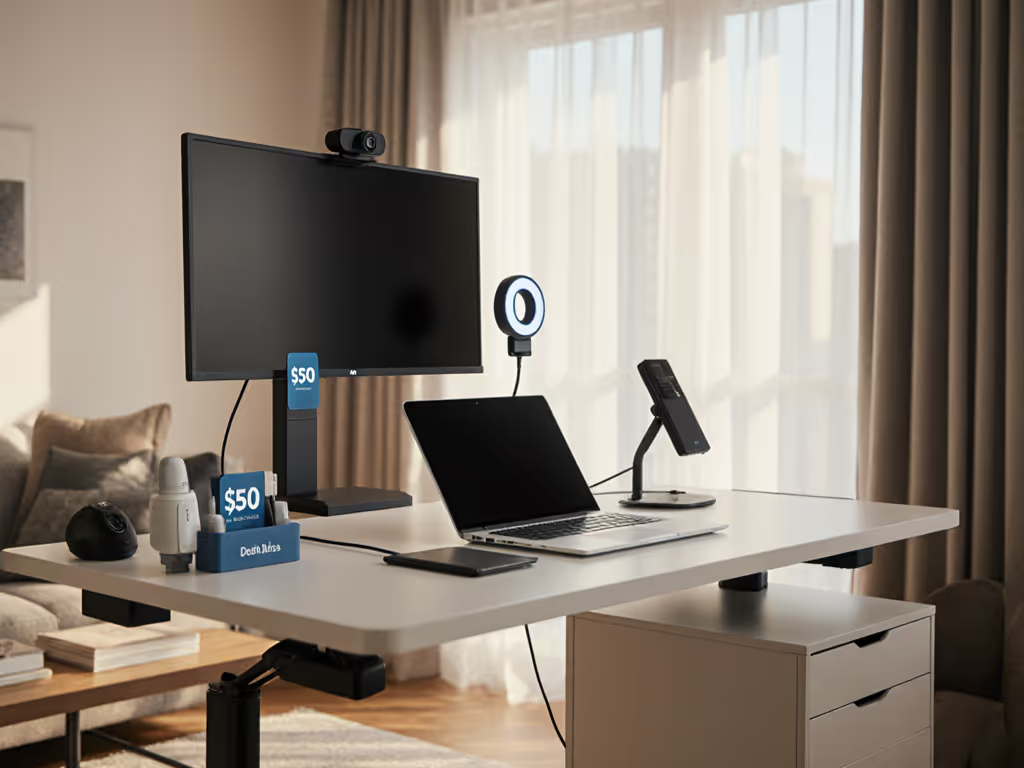
As a non-clinical ergonomics facilitator who's audited hundreds of home offices, I've noticed something fascinating about office desk accessories (they're rarely considered as part of a seasonal workflow rhythm). When your seasonal workspace bundles align with your natural reach arcs and clearance requirements, you don't just get pretty decor; you gain measurable productivity through reduced reach strain and frictionless transitions between tasks. This January 2026, as you're evaluating your workspace setup, understanding how seasonal elements integrate with your physical dimensions matters more than aesthetic appeal alone. Comfort emerges when clearances match your natural reach arcs. For seasonal trends that still respect fit-first measurements, see our Spring desk refresh picks.
The Hidden Strain of Seasonal Workspace Shifts
Most remote workers treat their desk setup as static, then wonder why adding holiday decorations or New Year planning tools creates workflow collisions. That "festive" Christmas office decor might look lovely until your wrist angles change because you're reaching over holiday cards to access your keyboard tray. Or your Valentine's Day workspace additions force you to crane your neck toward your monitor as you're now sitting slightly off-center. These micro-adjustments accumulate into real physical strain.
The Unseen Workflow Collisions
Consider these common scenarios I've documented in home office audits:
- Holiday card chaos: Thanksgiving desk essentials like greeting card piles create clearance issues that force users into shoulder-shrugged postures
- New Year planning sprawl: Productivity tools like large desk calendars get placed in suboptimal locations because users haven't measured their actual reach zones
- Seasonal decoration interference: Valentine's Day workspace additions encroaching on your primary work zone, requiring you to constantly adjust your posture
- Calendar transition trauma: Switching from one year to the next creates temporary chaos as users wrestle with ill-fitting replacements
My own journey into ergonomic precision began when I chased wrist pain with expensive keyboards, only to realize my keyboard tray was colliding with a center drawer during holiday planning season. The "Christmas office decor" I'd added had pushed my calendar setup forward, subtly altering my posture over weeks. After mapping my reach arcs and knee clearance during different seasonal configurations, I discovered that a low-profile track and properly sized calendar surface fixed everything. Ergonomics isn't about brand loyalty; it's about dimensions aligning with bodies throughout the year's natural rhythm.
The Measurement Gap in Seasonal Workspace Planning
Most people approach seasonal workspace changes with the same approach they use for outfit choices (based on aesthetics rather than measurements). They select a large wall calendar without considering:
- How it affects their vertical eye travel distance
- Whether it creates a new glare point from seasonal lighting changes If glare or eye strain is a concern, compare options in our ergonomic desk lamp tests.
- If it forces them to reach outside their optimal work envelope
This is where clearance checklists become essential. For true body-first fit, you need to measure:
- Vertical clearance: How high can you comfortably glance without neck strain? (Most adults: 15-20 inches above eye level)
- Horizontal reach: What's your maximum comfortable extension while maintaining neutral posture? (Typically 12-16 inches from torso)
- Depth utilization: How much desk depth remains available after main work tools? (Minimum 4 inches for seasonal elements)
Without these measurements, your Thanksgiving desk essentials might be positioned where they force repetitive micro-adjustments that trigger fatigue by 3 PM.
Evaluating Seasonal Workspace Bundles That Actually Fit
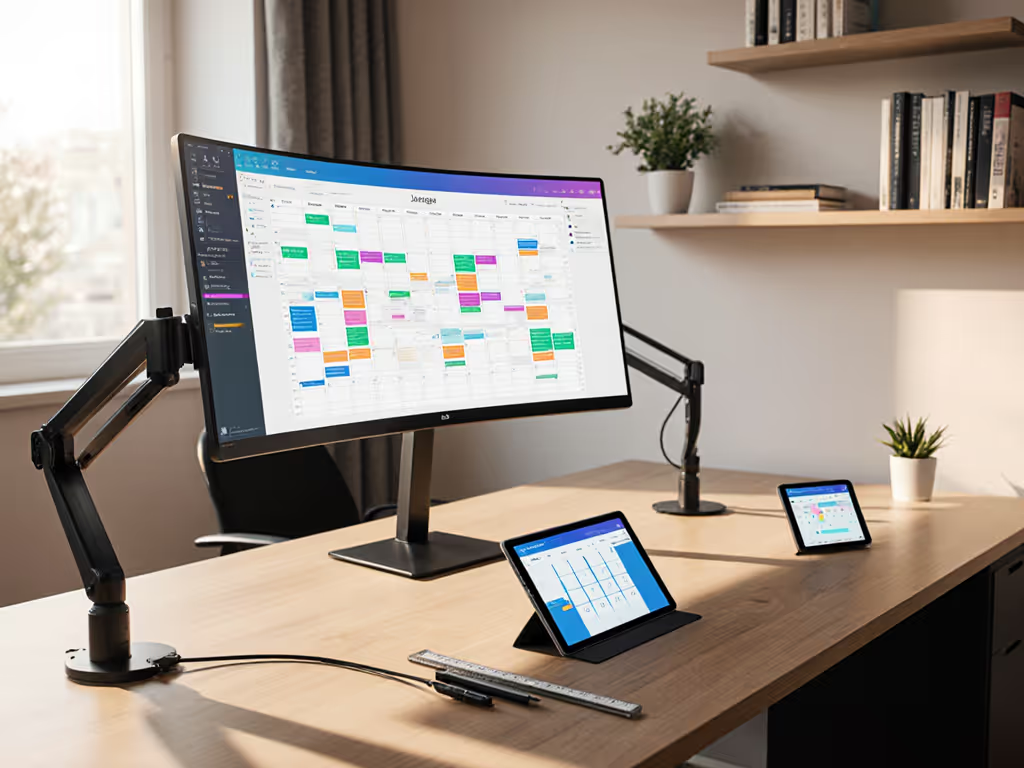
Let's examine how to select office desk accessories that integrate seamlessly with your existing ergonomic setup while accommodating seasonal needs. I'll focus on calendar solutions since they're the backbone of seasonal workspace organization, but the principles apply to all decorations and planning tools. For tech-forward setups, explore our digital desk calendars that sync with your workflow.
Bloom Planners 2026 Desk & Wall Calendar: The Reach-Arc Friendly Choice
The Bloom Planners 2026 Desk & Wall Calendar (16" × 21") stands out in my evaluations because it's designed with dimensional awareness. Its generous daily blocks provide ample writing space without requiring excessive reaching, and the thickness of the border is actually a measurement feature, creating a natural hand rest zone that prevents your wrist from extending beyond neutral position.
Ergonomic advantages:
- Proper scale for comfortable viewing distance (20-24 inches) without eye strain
- Wall-mounting capability that keeps it outside your primary work envelope
- The plastic corners that secure pages create a stable surface that doesn't require constant readjustment
- Dimensions that fit within standard reach arcs for most users
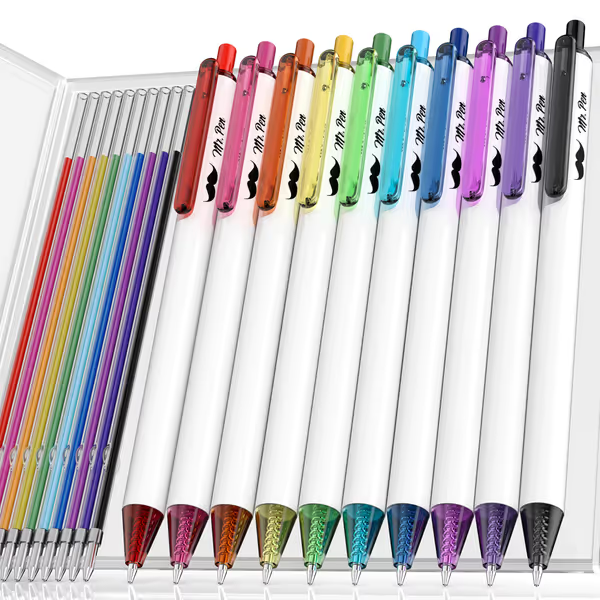
Mr. Pen Cute Ballpoint Pens Assorted Color Ink
Colorful, smooth-flowing pens with refills for journaling and creative work.
$5.85
Tip Size0.7mm Fine Point
Tip Size0.7mm Fine Point
Pros
Vibrant colors with 12 extra refills for long-lasting use.
Smooth, precise writing suitable for journaling and art.
Cons
Inconsistent reports on writing smoothness and smudge resistance.
Customers find the ballpoint pens worth their price and appreciate that they come with extra ink refills. The colors are great, and they work well for journaling. The writing smoothness and quality receive mixed feedback - while some say they write smoothly, others report they barely write at all. The smudge resistance also gets mixed reviews.
Customers find the ballpoint pens worth their price and appreciate that they come with extra ink refills. The colors are great, and they work well for journaling. The writing smoothness and quality receive mixed feedback - while some say they write smoothly, others report they barely write at all. The smudge resistance also gets mixed reviews.
Smudge Ink Sweets & Blossoms 2026 Calendar Bundle: Dual-Location Strategy
This bundle recognizes a critical ergonomic principle: Posture follows dimensions. By providing both a wall calendar and desk calendar, it allows you to place high-frequency reference items (like daily appointments) within your primary reach arc while positioning reference-only items (like seasonal holiday reminders) in your secondary glance zone.
The key measurement insight here is understanding your visual hierarchy:
- Primary work zone: 0-12 inches from screen (for immediate reference)
- Secondary glance zone: 12-24 inches (for frequent reference)
- Tertiary awareness zone: 24+ inches (for occasional reference)
The Smudge Ink bundle correctly positions its desk calendar in the secondary zone and wall calendar in the tertiary zone, preventing unnecessary head movement while maintaining awareness of seasonal changes.
AIM Studio Co Seasonal Collection: The Renter-Friendly Solution
This collection demonstrates thoughtful consideration for the space constraints many remote workers face. Their calendars are designed with minimal depth requirements (just 0.75 inches), making them viable for shallow desks where reach arc collisions with drawers are common.
Critical risk notes for apartment dwellers:
- Avoid heavy wall calendars that require drilling (AIM Studio's magnetic calendar system solves this)
- Look for products with documented dimension ranges, AIM Studio provides exact measurements for each component
- Choose accessories with low profiles that won't interfere with your chair's backrest during recline For more renter-safe, drill-free solutions, see our eco-friendly renter gear guide.
Creating Your Seasonal Workspace Roadmap
Rather than treating seasonal changes as disruptions to your workspace, plan them as intentional ergonomic transitions. This approach prevents the return fatigue many experience when holiday accessories create workflow collisions.
Step 1: Measure Your Seasonal Reach Arcs
Create a clearance checklist specific to your body and desk dimensions:
- Sit in your neutral posture position
- Extend your dominant arm forward at keyboard height
- Mark the maximum comfortable extension point
- Repeat at calendar viewing height
- Note the distances where you feel strain beginning
These measurements become your non-negotiable boundaries for all seasonal office desk accessories.
Comfort emerges when clearances match your natural reach arcs.
Step 2: Map Your Seasonal Workflow Zones
Different times of year require different workflow patterns. Create a calendar of your own seasonal shifts:
- Q1 (January-March): Planning season: requires ample writing space and visual goal tracking
- Q2 (April-June): Execution season: needs minimal desk distractions
- Q3 (July-September): Review season: benefits from side-by-side calendar and document viewing
- Q4 (October-December): Coordination season: requires multiple reference points for holiday scheduling
Each quarter has different ergonomic demands that your seasonal workspace bundles should accommodate without requiring complete reconfiguration.

Step 3: Implement the "One-In, One-Out" Rule for Seasonal Accessories
To prevent visual noise and physical clutter that disrupts your reach arcs:
- When adding Christmas office decor, remove an equivalent visual element
- Before installing New Year productivity tools, eliminate something from the previous year
- Ensure every seasonal addition has a designated zone that doesn't infringe on your primary work envelope
This creates predictable total cost of ownership (you're not accumulating accessories that eventually create workflow collisions). If you want a ready-made, clutter-free set, check our dimension-verified minimalist bundles.
Your Actionable Next Step: The Seasonal Workspace Audit
This January 2026, conduct a 15-minute seasonal workspace audit using these steps:
-
Identify reach arc violations: Place your hand where your seasonal calendar sits. Does maintaining this position create shoulder elevation or wrist extension?
-
Measure clearance zones: Use a tape measure to document your comfortable reach boundaries at different heights
-
Test seasonal transitions: Simulate adding your planned Valentine's Day workspace elements, does anything collide with your existing setup?
-
Verify bundle compatibility: Before purchasing any seasonal workspace bundle, confirm its dimensions fit within your measured zones
-
Document your findings: Create a simple clearance checklist that travels with you if you relocate your workspace
Mr. Pen's retractable gel pens with their 0.7mm precision tips are perfect for marking these measurements directly on your desk (using removable tape markers) and filling out planning pages without bleeding through, essential tools for implementing your seasonal ergonomic strategy. The comfortable grip design prevents hand fatigue during your measurement process, and the variety of colors lets you code different seasonal zones.
Remember: productivity isn't about working harder through discomfort. It's about creating measurable comfort through intentional dimensions. When your seasonal workspace bundles respect your body's natural geometry, you eliminate the micro-adjustments that accumulate into fatigue and frustration.
The most successful home office setups I've audited share one trait: they've planned for seasonal changes as part of their ergonomic system, not as afterthoughts. This transforms what could be disruptive workflow collisions into seamless transitions that support rather than strain your natural movements.
Your next step: Before adding any seasonal element to your workspace this year, measure first. Print this simple clearance checklist, complete it for your current setup, then use it to evaluate every potential addition. When you honor your reach arcs with dimensionally appropriate accessories, you're not just decorating, you're optimizing for year-round comfort where posture follows dimensions.
Related Articles